TRL Library Architecture for RLHF Practitioners
Understanding TRL's stable and experimental trainer boundaries unlocks RLHF at scale.
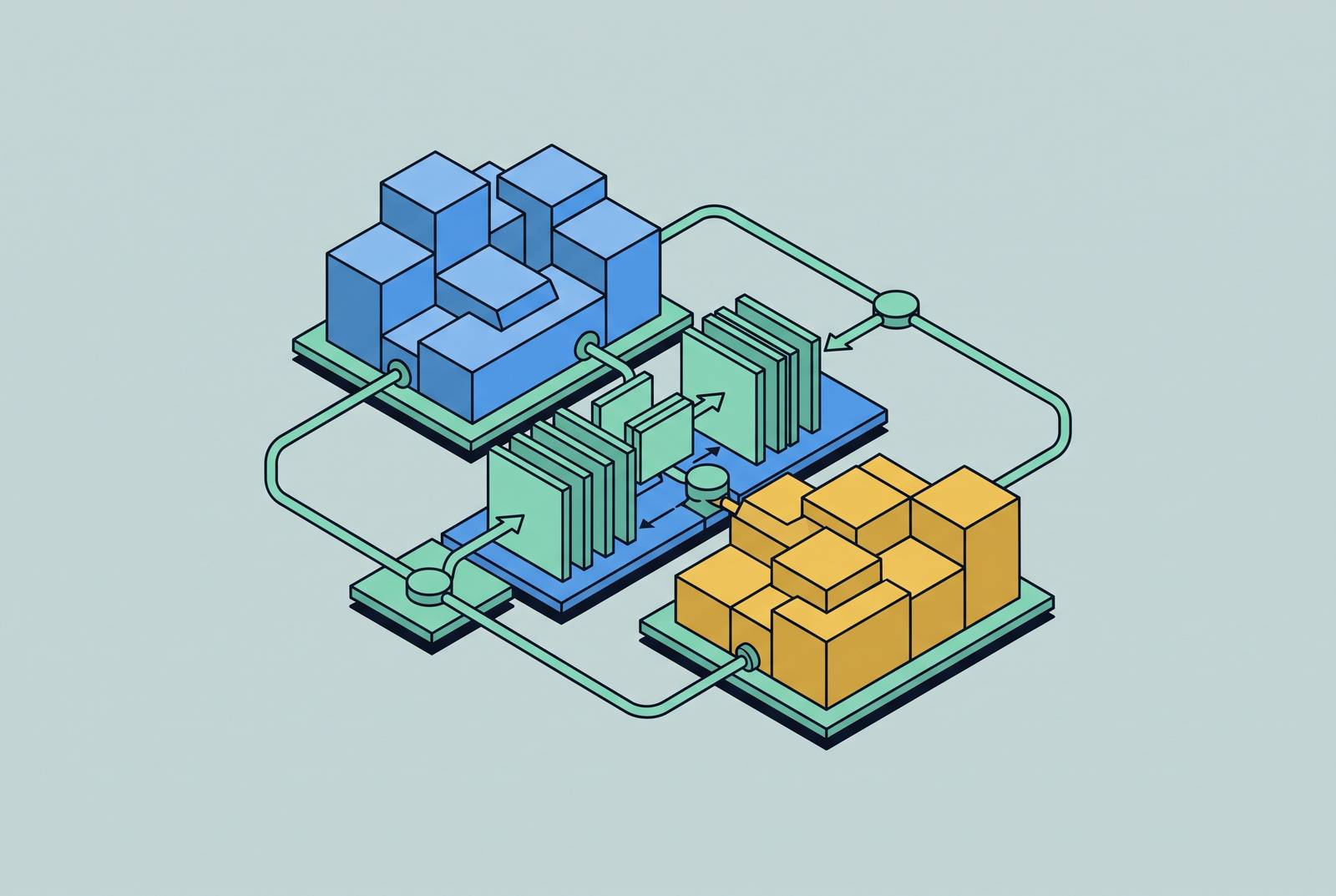
Understanding how these layers connect and where the stable/experimental boundary sits is the core competency RLHF practitioners need to work effectively in TRL.
What TRL is in the post-training landscape
TRL is Hugging Face's full-stack library for post-training transformer language models, covering supervised fine-tuning, reward modeling, preference optimization, and online reinforcement learning. The library crossed a real threshold on March 31, 2026, when v1.0 shipped with semantic versioning, stable APIs, and an explicit boundary between stable and experimental trainers TRL v1.0 release. That boundary determines which parts of the library practitioners can build production systems on top of, and which parts remain research in motion. The versioned API is a different kind of commitment: it tells practitioners which parts of the library they can build production systems on top of, and which parts are still research in motion.
TRL is not the only tool solving this problem. verl and OpenRLHF, among others, also handle post-training, often with an emphasis on disaggregated, multi-cluster scale. That's a legitimate trade-off worth embracing on its own terms. This piece is not a survey of that broader field. It focuses on how TRL's internal architecture works and what it actually takes to operate inside it competently.
The Trainer abstraction as TRL's organizing principle
Nearly every post-training method in TRL gets wrapped in a Trainer class that subclasses transformers.TrainerThough PPOTrainer is inspired by that base class, it does not directly subclass it. The abstraction owns the training loop, batching, the forward pass, the method-specific loss computation, gradient steps, logging, and checkpointing. What varies from one trainer to the next is narrower than you'd expect: the loss function and the data format change, but the machinery running underneath stays put.
This consistency extends to configuration. Each trainer pairs with a config class, SFTConfig, DPOConfig, GRPOConfig, and each of those inherits directly from transformers.TrainingArguments. Same knobs, same interface, regardless of which method sits on top. The practical payoff is that switching from one post-training method to another means swapping a trainer object and a config object, not rewriting the surrounding infrastructure. Distributed training, PEFT integration, and logging all carry over automatically. TRL natively supports DDP, DeepSpeed ZeRO, and FSDP through Accelerate, so the same trainer call that runs on a single GPU scales to a multi-node cluster without a separate code path.
That's the on-ramp the angle of this piece points to. Learn the interface pattern once, and it applies across the entire RLHF pipeline, from cross-entropy fine-tuning to group-relative policy optimization. Nobody has to relearn a new mental model for every stage of alignment.
The trainer taxonomy: stable vs. experimental
TRL's stable core covers GRPOTrainer and RLOOTrainer on the online side, SFTTrainer, DPOTrainer, and KTOTrainer on the offline side, and DistillationTrainer for knowledge distillation. PRMTrainer, despite handling the closely related job of process reward modeling, is in the experimental namespace rather than the stable one. The experimental tier is considerably larger and more crowded: A2POTrainer, AsyncGRPOTrainer, GMPOTrainer, and OnlineDPOTrainer on the online side; CPOTrainer, ORPOTrainer, and TPOTrainer offline; and a long list of distillation variants, AsyncDistillationTrainer, GKDTrainer, GOLDTrainer, IWOPDTrainer, MiniLLMTrainer, SDFTTrainer, SDPOTrainer, SSDTrainer. PPOTrainer also remains part of the ecosystem, though XPOTrainer, NashMDTrainer, and BCOTrainer were removed outright in v1.14.0.
The boundary between the two tiers exists for a structural reason: the shared backbone architecture across SFTTrainer, RewardTrainer with PEFT, and PPO is what makes this economical on hardware. Housing rapidly-evolving research inside a trl.experimental namespace lets the core library hold to backward compatibility while still giving new methods a place to live and mature. Stable trainers carry API commitments under semantic versioning. Experimental trainers carry no such guarantee, and their signatures can change between one weekly release and the next. That distinction is not academic. Community reports place TRL v1.9.2 running alongside Transformers 5.14.1, PEFT 0.19.1, Accelerate 1.14.0, vLLM 0.20.2, and PyTorch 2.11.0 as of August 2026, which gives a sense of how fast the surrounding dependency stack moves alongside the library itself. At that pace, experimental methods graduate, get renamed, or get removed faster than documentation tends to catch up. Knowing which namespace a given trainer lives in functions as a practical risk signal before it functions as a taxonomy question.
SFTTrainer and RewardTrainer: the pipeline's upstream stages
SFTTrainer handles the least glamorous but most foundational job in the pipeline: plain next-token cross-entropy fine-tuning on a target dataset, with no RL objective and no preference signal involved. It's typically the first thing run, because it brings a base model into the right distribution before any alignment stage tries to shape its behavior further. What SFTTrainer adds on top of writing a raw Transformers training loop by hand is not nothing: constant-length sequence packing, PEFT and LoRA integration out of the box, and the same config interface every downstream trainer uses. That last point is what makes it a composable first stage in a pipeline rather than a bespoke setup someone has to bolt on separately.
DeepSeek-R1 added a short SFT cold-start phase before GRPO to stabilize early training, then applied GRPO on top, illustrating that even pure-RL recipes often need SFT upstream. Even a training recipe built around reinforcement learning at its core often needs a supervised stage upstream to keep the policy from wandering during the first, most volatile steps.
RewardTrainer picks up the next stage: training the scalar reward model that takes a prompt-response pair and outputs a single reward score. That model then plugs directly into PPO as the online reward signal, or gets used offline for re-ranking candidate generations. RewardTrainer follows the identical HF Trainer API pattern, batch size, learning rate, epoch count, all set through RewardConfig, with distributed training handled through Accelerate exactly as it is elsewhere. PRMTrainer extends the idea to process reward models, scoring intermediate reasoning steps rather than only the final output, which matters for chain-of-thought tasks where the path to an answer counts as much as the answer itself.
The PEFT integration pattern across these first two stages is where the economics start to make sense on real hardware: train the base model with SFTTrainer, train a reward adapter with RewardTrainer plus PEFT, then fine-tune new adapters with PPO using the same underlying base model weights for both later stages. The shared backbone is what keeps three separate training stages from requiring three separate copies of a large model sitting in memory TRL v1.0 release.
PPOTrainer: the classic four-model RL loop and its infrastructure cost
PPO earns its reputation for being resource-hungry honestly. It requires four model copies running at once, an actor that is the policy actually being trained, a critic that is a value model also being trained, a frozen reference model that is the original SFT checkpoint used for inference only, and a frozen reward model used for inference only. Each of those four carries a different memory footprint and a different compute shape, and all four have to be resident simultaneously for a single training step to complete.
The KL regularization mechanism keeps the loop from drifting somewhere useless: log-probabilities for query and response tokens get computed under both the active policy and the frozen reference, and the resulting KL divergence gets used as an additional reward signal to prevent the policy from drifting too far from the reference LLM.
Running PPO well means watching a specific set of metrics TRL logs during training. objective/non_score_reward tracks the KL penalty term itself, computed as beta times the summed KL divergence. policy/approxkl_avg policy/approxkl_avg tracks the approximate KL between consecutive policy updates, functions as the primary stability indicator, and is the first number to check when a run starts behaving strangely. loss/policy_avg and loss/value_avg report separately, since the actor and critic are each optimizing their own loss and a spike in one doesn't necessarily mean the other has gone wrong.
That infrastructure is unnecessary unless the task actually calls for it. PPO makes sense when a trained reward model is scoring something subjective or complex enough that it can't be reduced to a deterministic check, when neither GRPO's verifiable-reward assumption nor DPO's offline-preference-pairs assumption holds. When one of those simpler assumptions does hold, the four-model footprint becomes an unnecessary cost. GRPO removes the critic entirely once rewards are verifiable, and DPO removes the online generation loop entirely once offline preference data is sufficient. TRL's approach relies on either a dedicated value model or a shared transformer backbone with separate heads, with AutoModelForCausalLMWithValueHead implementing the shared-backbone path.
GRPOTrainer: removing the critic
Group Relative Policy Optimization takes a different approach to the same problem PPO's critic solves. The critic disappears along with its value head and its separate loss term; the reward distribution within the batch does the work a second model used to do.
The KL regularization term does not disappear, though TRL v1.0 release. GRPO keeps a KL-divergence penalty against a reference policy, functioning much like PPO's optional KL term. What changes is the VRAM math Research brief. A typical batch shape looks like 8 completions per prompt across 64 prompts, which works out to 512 rollouts generated per training step Hugging Face blog. That's not a small number to regenerate every single step, and it's the reason rollout throughput becomes its own engineering problem later in this piece.
GRPO's natural home is verifiable rewards: programmatic checks like whether a math answer is correct or whether a set of unit tests passes. That's what makes it the default choice for training reasoning and tool-use behavior specifically. DeepSeek-R1-Zero was trained entirely on GRPO across math, code, and logical reasoning tasks, with DeepSeek-R1 itself adding only the short SFT cold-start mentioned earlier before applying GRPO on top. One of the most discussed reasoning models in the field came out of a trainer that sits, today, in TRL's stable namespace.
None of that makes GRPO forgiving. Practitioners run into specific failure modes that appear once a run is already mid-training: reward hacking against the group-relative signal, reward variance collapse when every completion in a group scores about the same, and instability once completions run long. These aren't edge cases so much as the standard hazards of the method, and monitoring should be built around them before a run starts, not after it stalls. TRL v1.7 added a router load-balancing auxiliary loss to GRPOTrainer, RLOOTrainer, and AsyncGRPOTrainer, later extended to DPOTrainer and KTOTrainer, to keep experts balanced when post-training mixture-of-experts models on preference data. Stable trainers, in other words, keep accumulating capability between major versions. Stability does not mean frozen.
DPOTrainer: preference alignment without online generation
Direct Preference Optimization, from Rafailov et al. in 2023, sidesteps the entire online-generation problem by optimizing a log-sigmoid loss over the ratio of log-probabilities between a chosen and a rejected response, measured against a frozen reference policy TRL documentation. No reward model gets trained separately. No on-policy sampling happens during training.
The surrounding Trainer infrastructure lets practitioners swap methods without rewriting infrastructure. That data-only requirement is also DPO's biggest practical advantage. There's no online generation loop to destabilize, which makes the loss noticeably more stable and predictable than GRPO's group-sampling approach. Anyone who has fought a GRPO run through reward variance collapse tends to find DPO's flat, offline objective a relief by comparison.
DPO is not a theoretical curiosity, either. It's the algorithm behind the post-training of Llama 3 and a considerable number of other production models, which gives DPOTrainer production lineage rather than only research lineage. That said, DPO has a real ceiling. If a task needs to score outputs against criteria that can't be captured in offline, static preference pairs, complex, subjective, or multi-turn judgment calls, DPO isn't the tool, and the choice comes back to either a trained reward model through PPO or a verifiable programmatic reward through GRPO. TRL also carries experimental DPO variants: OnlineDPOTrainer, which folds real-time generation into the preference loop, and SDPOTrainer. The data format requires "chosen" vs. "rejected" response pairs, since the dataset format is what changes here, not the surrounding Trainer infrastructure.
vLLM rollout integration: server mode and colocate mode
Here, model size shifts from an abstract concern to a rollout-planning variable with real consequences. On a single H100 80GB running in bf16 offline mode, a 7B model produces roughly 6,300 output tokens per second in aggregate; a 32B model drops to roughly 1,200 Hugging Face blog. That gap is the reason generation throughput has to be planned for explicitly rather than assumed away.
TRL supports two integration modes with vLLM to manage this. Colocate mode instead runs the vLLM engine on the same GPUs as training, alternating between generation and training phases. Colocate avoids the overhead of provisioning a second set of GPUs, but it serializes the two phases, generation waits on training and training waits on generation, rather than letting them run in parallel.
Experimentally, AsyncGRPOTrainer uses a spawned rollout process with a versioned queue, a bounded staleness policy, and NCCL or bucket-based weight synchronization selectable via a weight_sync_backend setting, allowing training and rollout to overlap asynchronously. As of August 2026, practitioners are reportedly running GRPOTrainer with vLLM for long-horizon agentic tasks, multi-turn tool calls, long completions, LoRA adapters, and terminal scalar rewards, which suggests the configuration has moved well past toy demonstrations even while sitting on the stable trainer. Rollout throughput matters because online methods generate completions during training, and at 512 rollouts per GRPO step, generation speed directly sets the training step time, the Hugging Face blog notes. TRL supports two integration modes. The config surface offers GRPOConfig(use_vllm=True, vllm_mode="colocate") as the default or GRPOConfig(use_vllm=True, vllm_mode="server") for explicit server mode, so one flag switches modes, consistent with the Trainer abstraction pattern. vLLM does not give TRL disaggregated multi-cluster orchestration, since for large fleet management Ray-based systems are the appropriate tool, making TRL's vLLM integration a single-node or modest multi-node solution.
PEFT, LoRA, and a quantized variant of it across the training pipeline
The shared-backbone economics mentioned earlier, training a base model once and layering adapters on top for each subsequent stage, are what make TRL's PEFT integration more than a convenience feature.