Reward Model Distillation for Inference-Time Efficiency
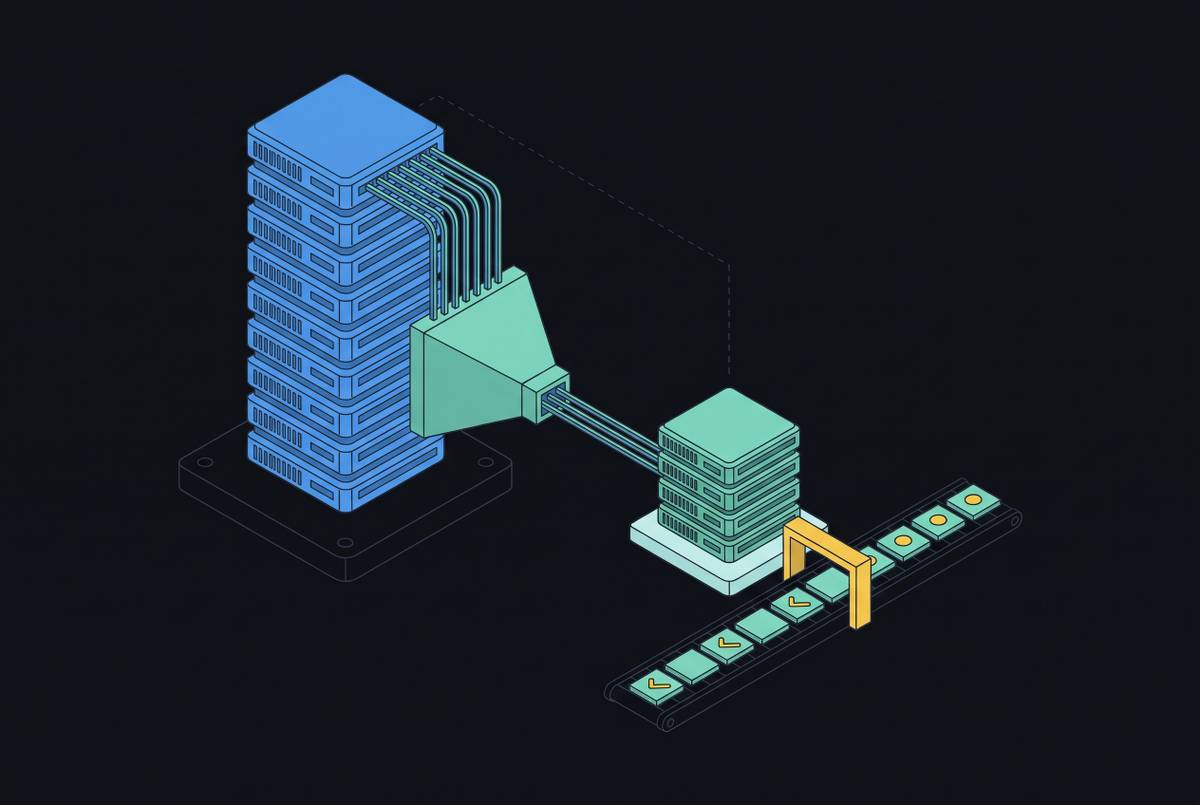
How small student reward models can guide search cheaply without being fooled.
Anjali Raghunathan
Senior Staff Writer
Anjali spent six years as an infrastructure engineer on a large-scale RL training team, where she built the rollout schedulers and sandboxed execution harnesses that kept thousands of concurrent environment instances alive. She now writes about the systems layer of agent post-training, with particular attention to the gap between a training run that completes and one that actually taught the policy something.
14 stories
How small student reward models can guide search cheaply without being fooled.
A tour of the toolkit for assigning credit when LLMs get one final score.
A sigmoid curve predicts which RLHF compute budgets yield meaningful gains versus wasted spend.
Offline RL trains language agents from logged data without costly live interactions.
Reward score climbs while model quality falls; win rate asks what humans actually prefer.
Complete checkpoints and portable sharding keep post-training stages reproducible.
Slow reward scoring leaves GPUs idle, and better reward models make it worse.
Asynchronous rollout generation eliminates PPO's training bottleneck at scale.
SFT, reward modeling, and preference optimization each demand separate cost planning.
How reward models' confidence levels fail to match actual human preferences downstream.
Stopping too late on reward scores causes models to hack rather than improve.
Reward models learn to mistake verbosity for quality because annotators do.
Quality metrics matter more than dataset size when training reward models for AI alignment.
Reward models rest on four hidden bets about human judgment, and some are failing.